Home
Home
【Kuse Station / Night Walk】(Maniwa, Okayama) Kamimachi and Shimomachi Shopping Streets at Night
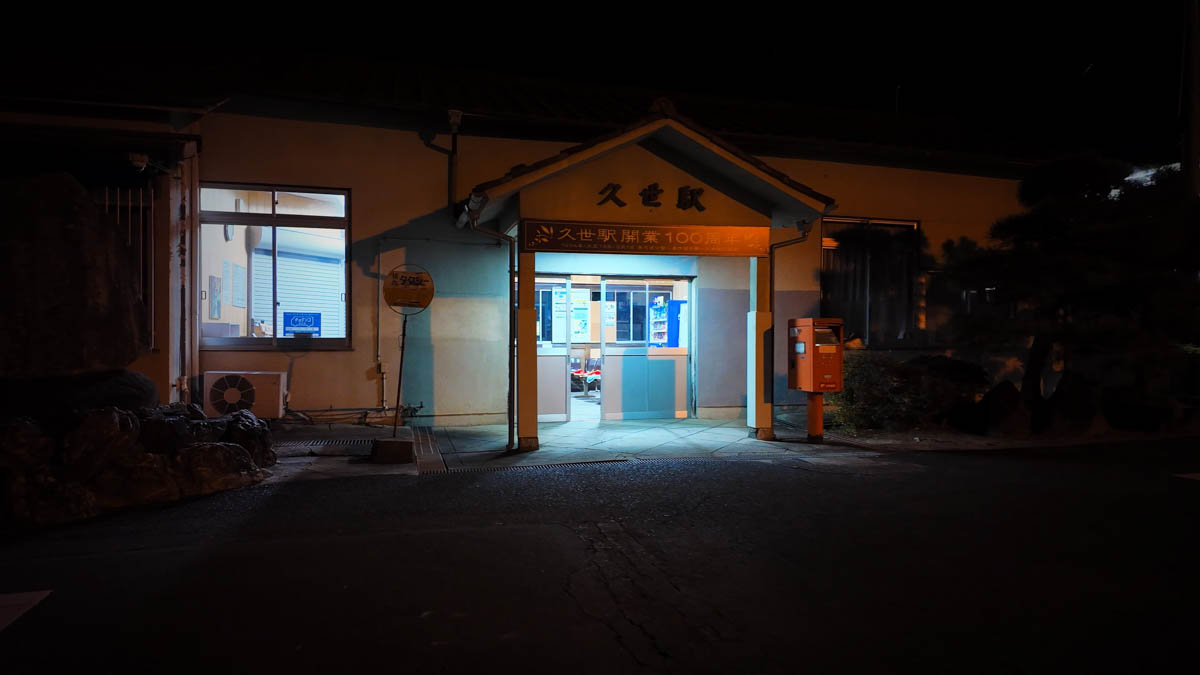
Visited: Tuesday, December 9, 2025
After leaving Kyoto and passing through Hyogo, I continued west to Kuse in Maniwa, Okayama Prefecture. Kuse is in the northern part of Okayama, in a mountainous basin far from the image many travelers have of the prefecture. It is not a place most visitors to Japan are likely to reach by accident, though some may pass nearby on the Chugoku Expressway.
This walk begins at Kuse Station on the JR Kishin Line. I had visited the town once before a few years earlier, and the atmosphere stayed with me enough that I wanted to return. The station building has a banner reading "Kuse Station 100th Anniversary," a small but clear reminder that this railway stop has been part of local life for a long time.
Kuse Station is also the nearest station to Maniwa City Hall. Maniwa was formed in 2005 through the merger of several towns and villages, and the city has a population of just under 40,000. Forestry and wood-related industries leave a strong impression here, and depending on the area, Maniwa is cold and snowy enough in winter to be associated with heavy-snow regions.
The station building has a deep, old-fashioned character. For someone who grew up with Showa-era mystery dramas, it is easy to imagine Kosuke Kindaichi stepping out of the shadows. One of the Kindaichi stories, Night Walking, is partly set in the fictional village of Onikobe, which is said to be located in the Maniwa area.
Around the Station
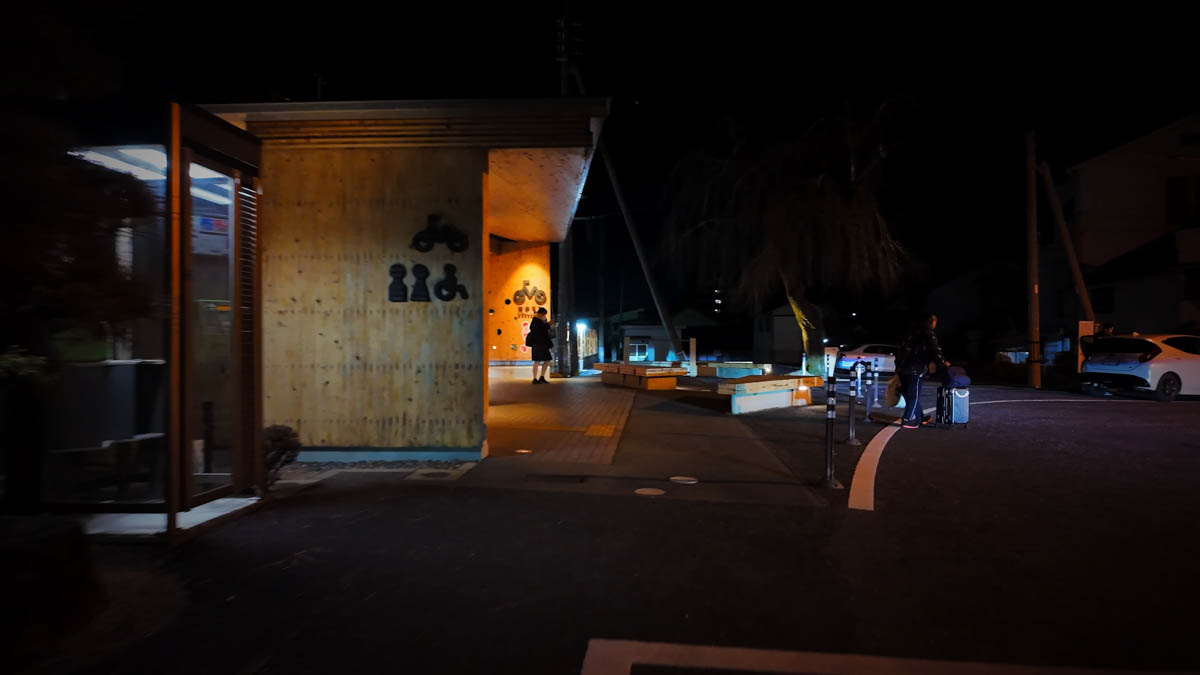
Right next to the station is a modern public restroom built with warm-looking wood. It also has space arranged in a way that seems convenient for cyclists to park road bikes. At night, the lit wooden columns and benches create a sharp contrast with the older station building.
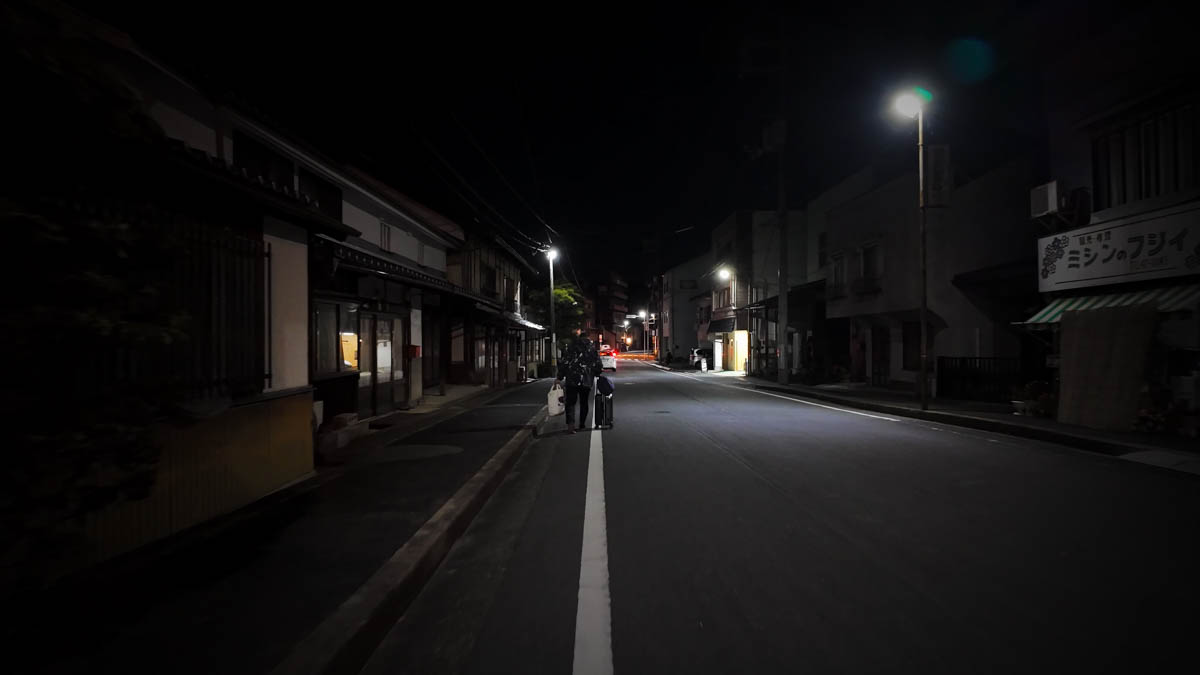
The road heading south from the station is lined with older buildings that look like former or long-running shops. On the left side, the gate of Juganji Temple comes into view. It is apparently a relocated gate from the former Kuse jin'ya, the local administrative office from the Edo period.
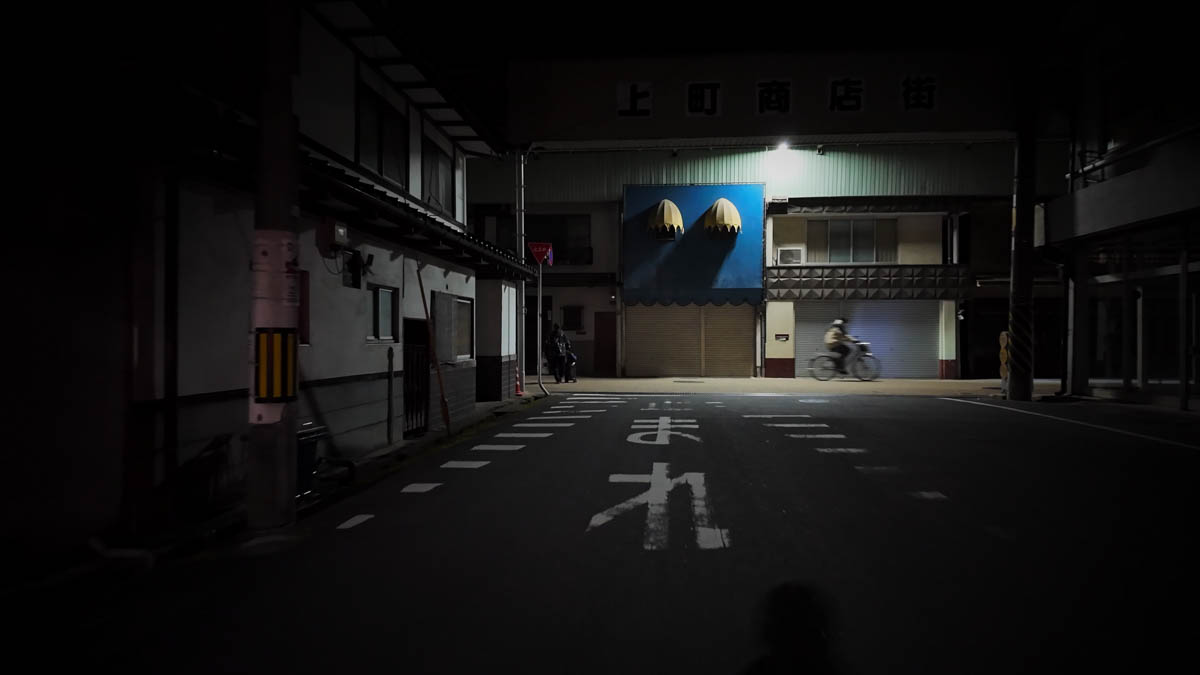
The blue awning and small white window shades caught my eye. The design has a slightly playful, handmade charm. Ahead is the covered shopping street along the old Izumo Kaido. Also known as Izumo Orai, this route is said to have older roots as a road connecting the Yamato and Izumo regions. It makes sense that the area still carries traces of an old post-town atmosphere.
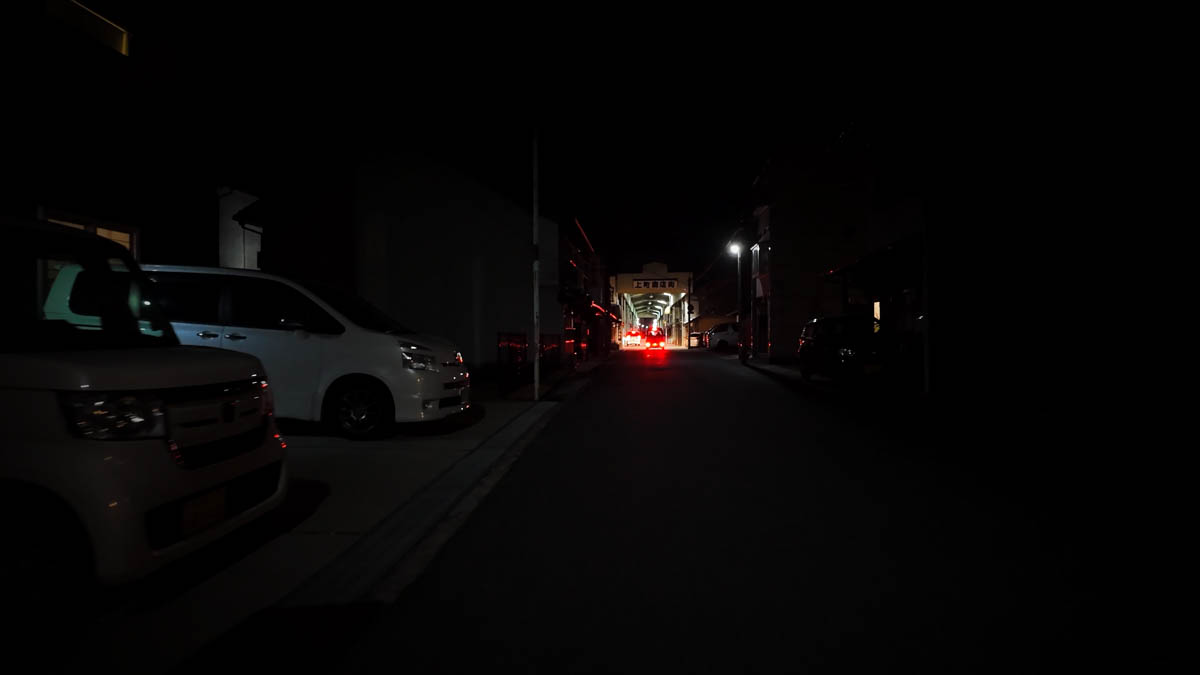
After walking out along the direction of Izumo for a while and then turning back, the words "Kamimachi Shopping Street" came into view.
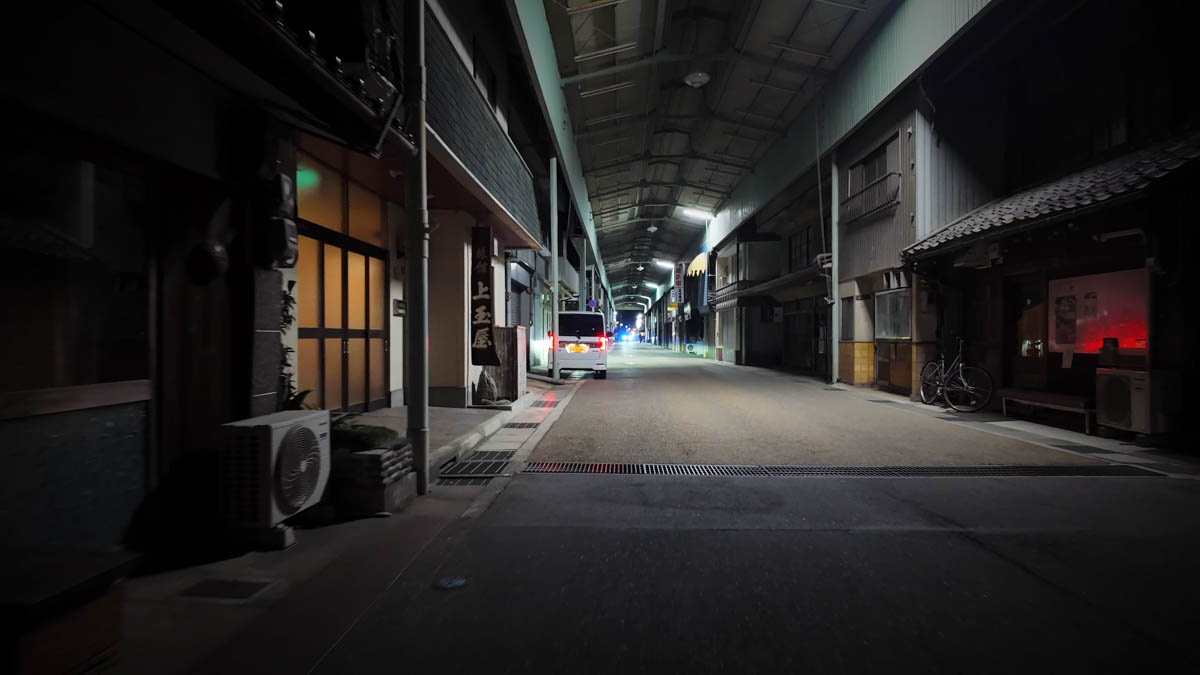
On the left is the sign for Kamitamaya. Looking it up, it appears to be a Japanese-style inn with tatami rooms. Several inns remain along this street, and from what I found, they seem to serve construction workers and others involved in local projects more than ordinary tourists.
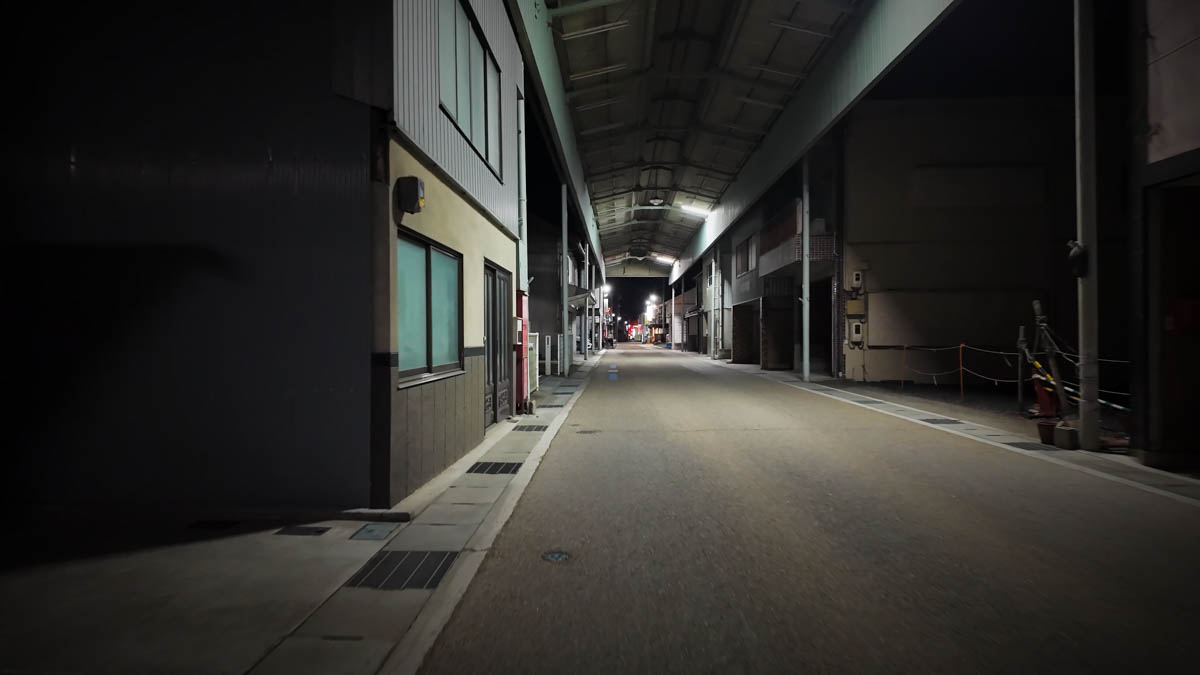
Inside the arcade, there were no pedestrians in sight. Only the ceiling lights fell across the road surface, and a row of closed shutters continued into the distance.
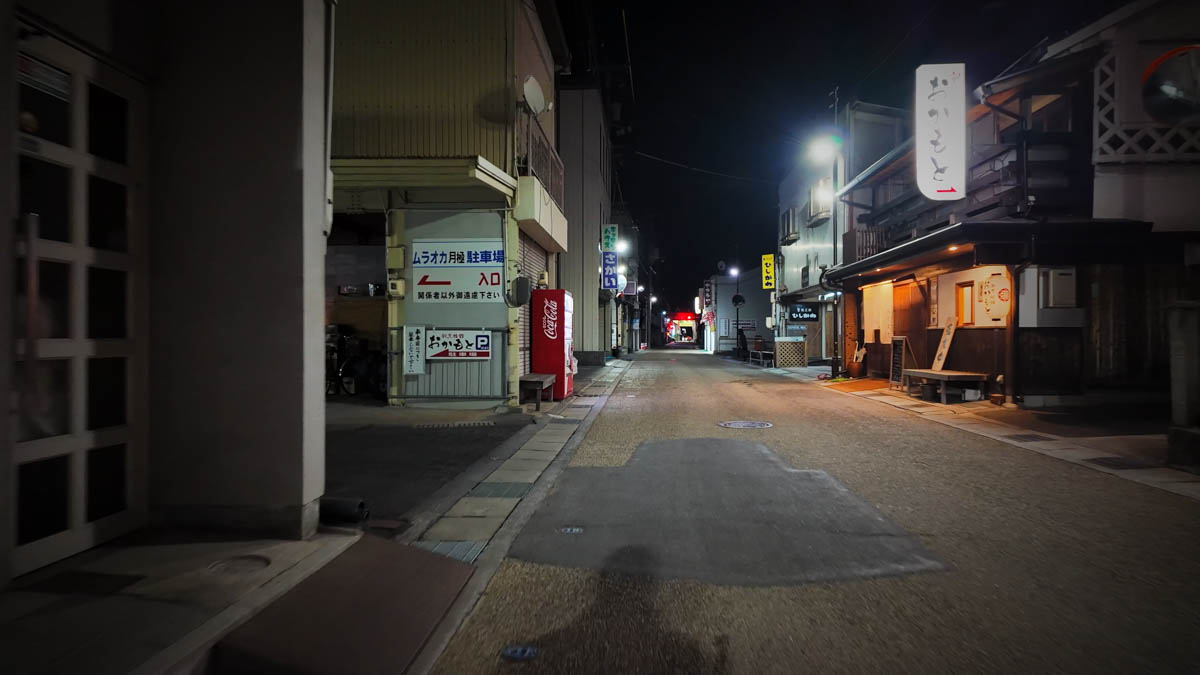
Just outside the Kamimachi arcade stands Okamoto, a traditional kappo-style inn. Its website describes seasonal river fish and eel in summer, mountain foods in autumn, duck hot pot in winter, and beef hot pot as a standard dish. Founded in 1880, it has a long history as a traditional Japanese-style inn, and the listed rates were more reasonable than I expected.
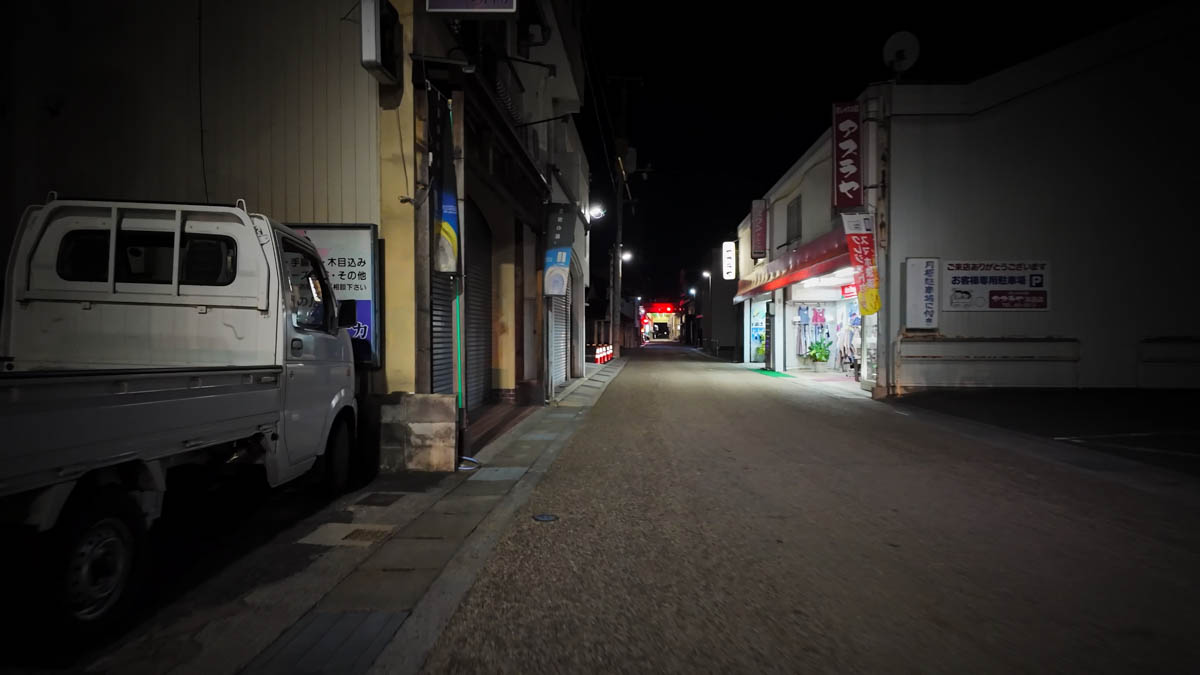
The lit shop on the right is Aburaya, a clothing store. Even in a quiet night scene like this, the shopfront gives the street a small sign of everyday life.
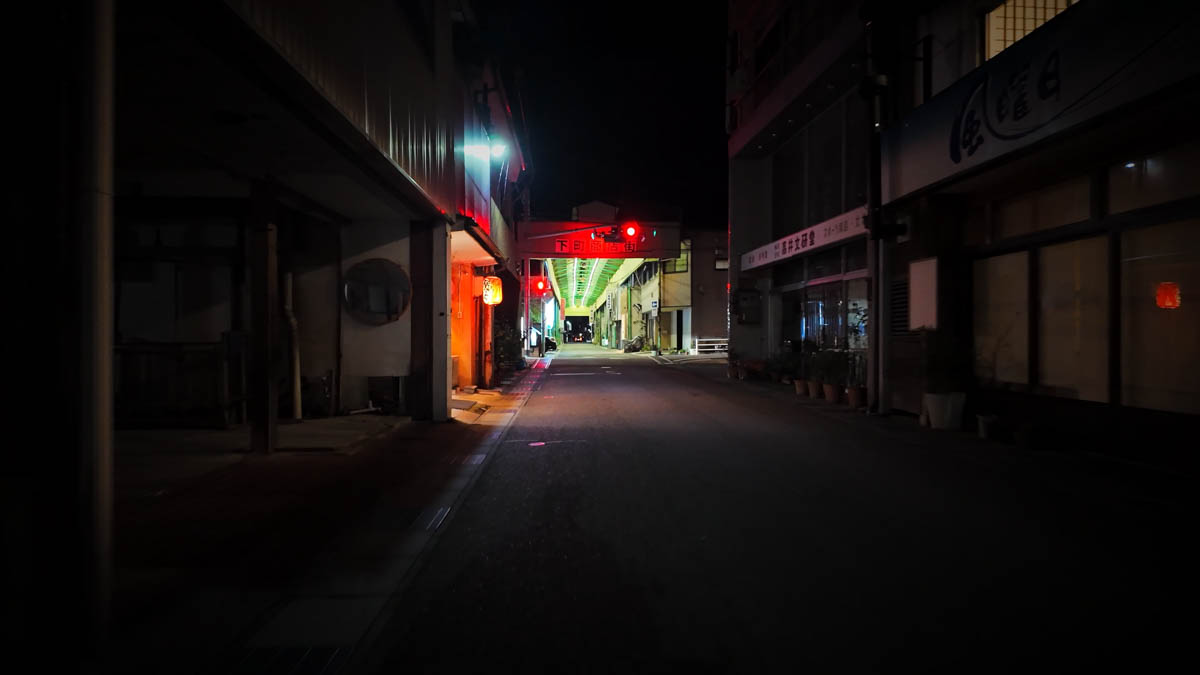
The covered arcade breaks for a short distance, then continues under a different name: Shimomachi Shopping Street. The green steel frame gives it a different character from Kamimachi, and the change in structure makes the walk feel like it is passing through a sequence of small districts rather than one single arcade.
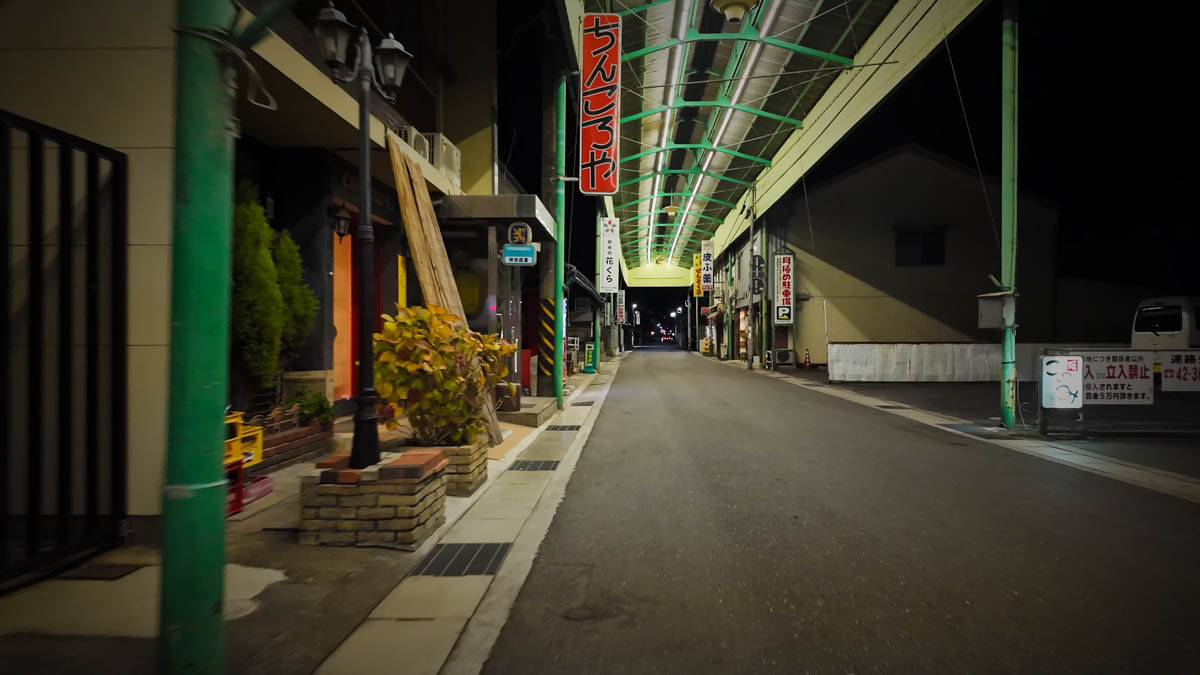
Inside Shimomachi Shopping Street, the sign for Chinkoroya stands out. It appears to be a yakitori restaurant. The shops were mostly quiet at this hour, but the signs and columns still gave the arcade a distinct local personality.
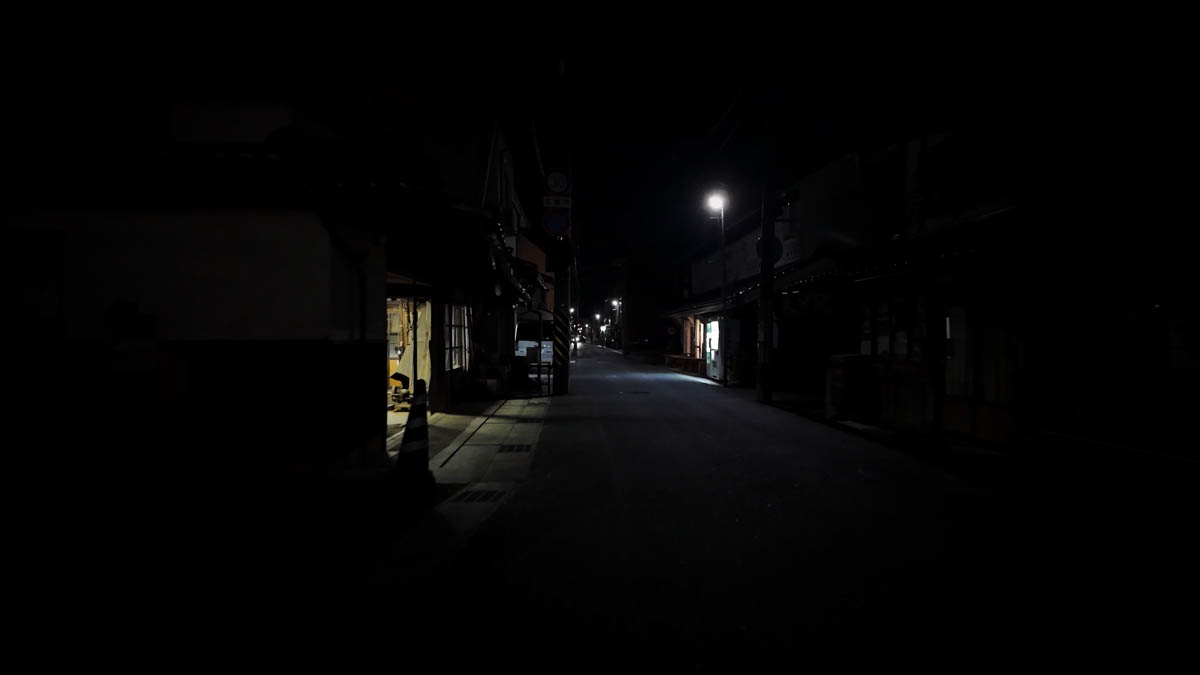
At the edge of the shopping street, the town became even quieter. The road continued with only a few scattered lights.
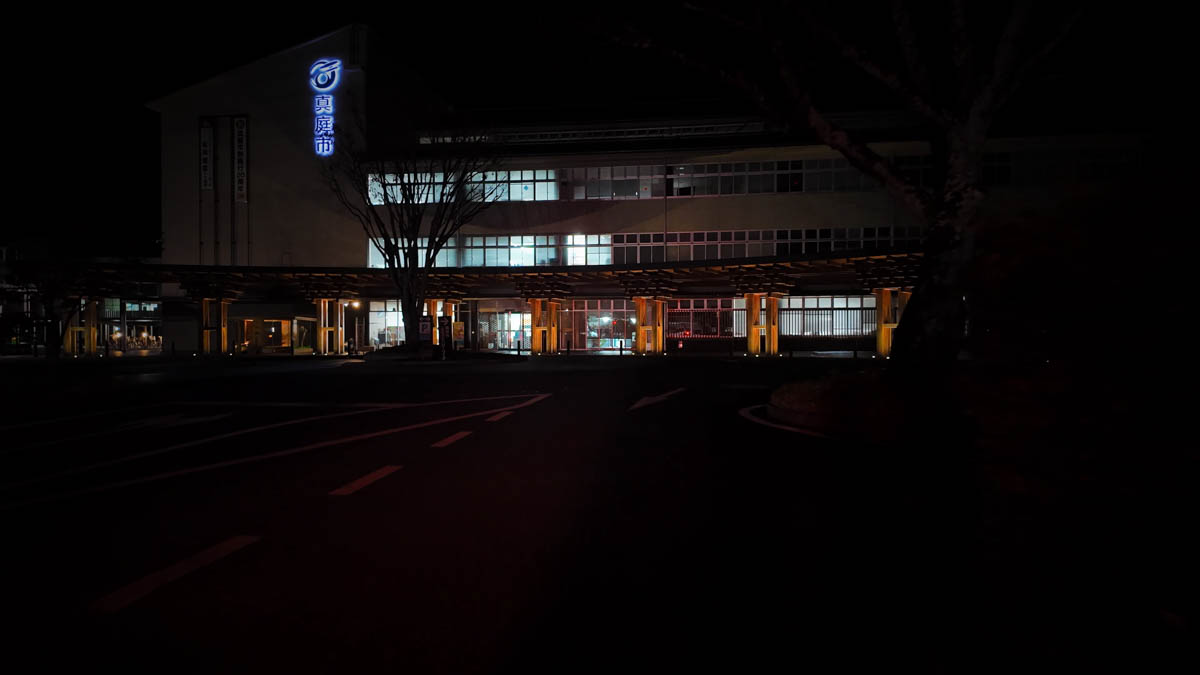
Walking onward, Maniwa City Hall came into view. The blue "Maniwa" logo glowed against the dark sky.
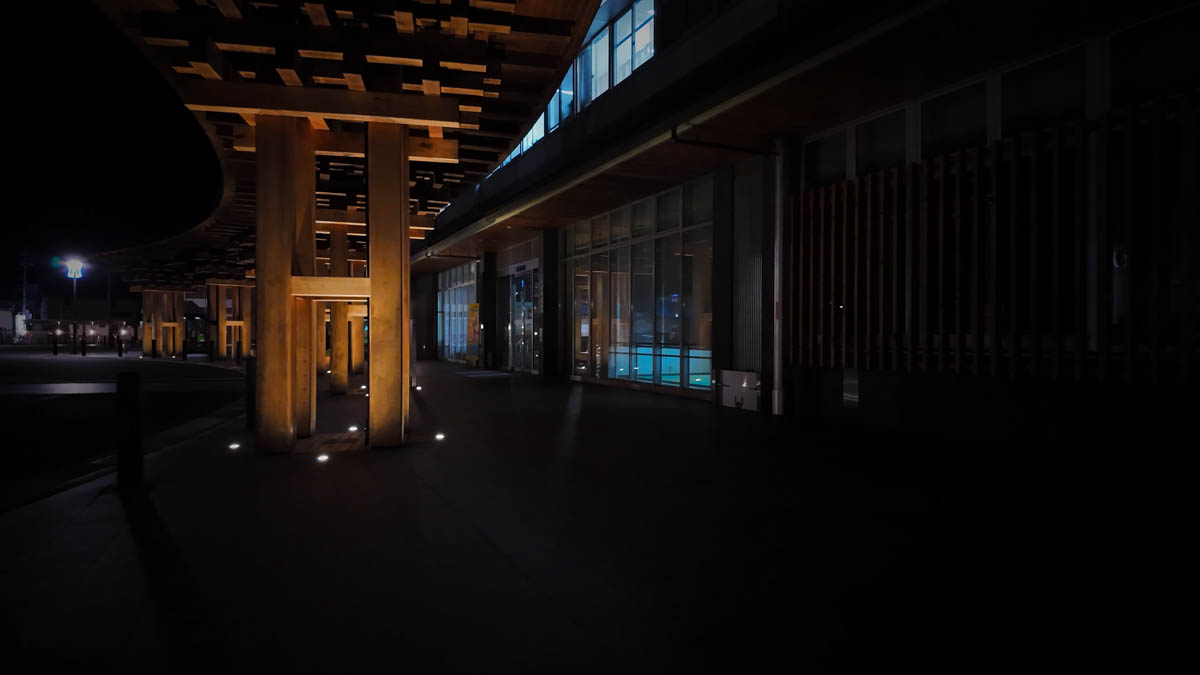
The entrance area uses a large amount of locally produced Maniwa wood. The roof structure is more elaborate than expected, and it naturally makes you look up while walking past.
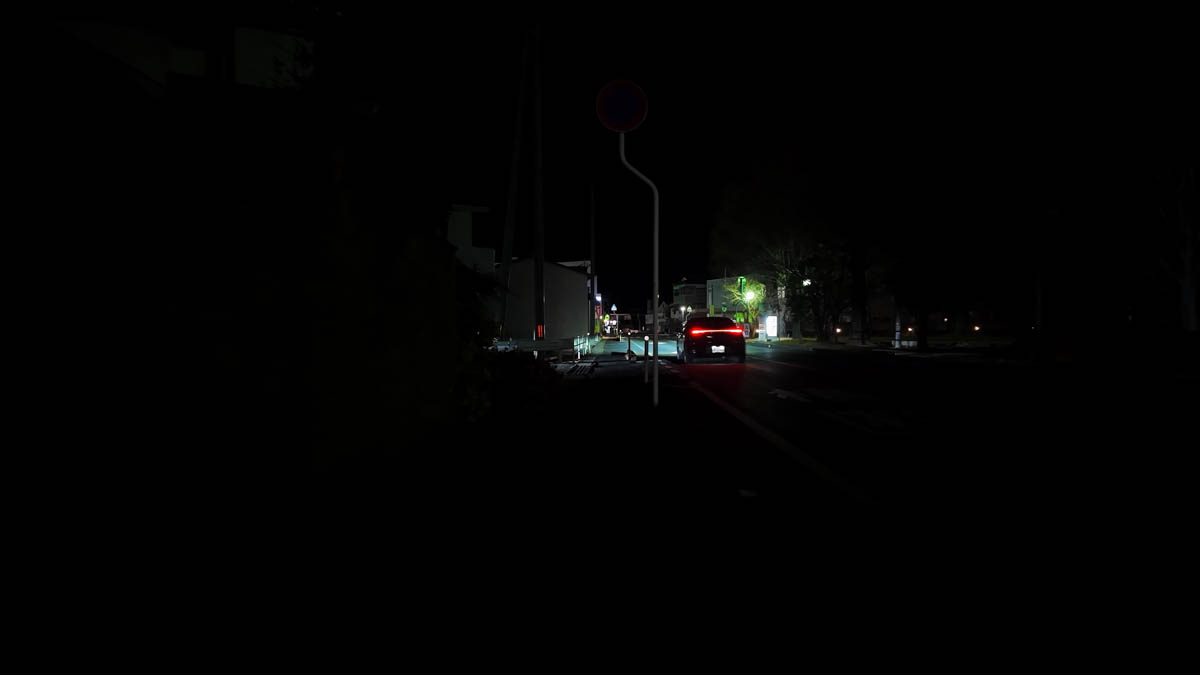
It was too dark to see clearly, but across the road stands the former Senkyo Elementary School building. Built in 1907, it is a Renaissance-style wooden school building and is designated as an Important Cultural Property of Japan.
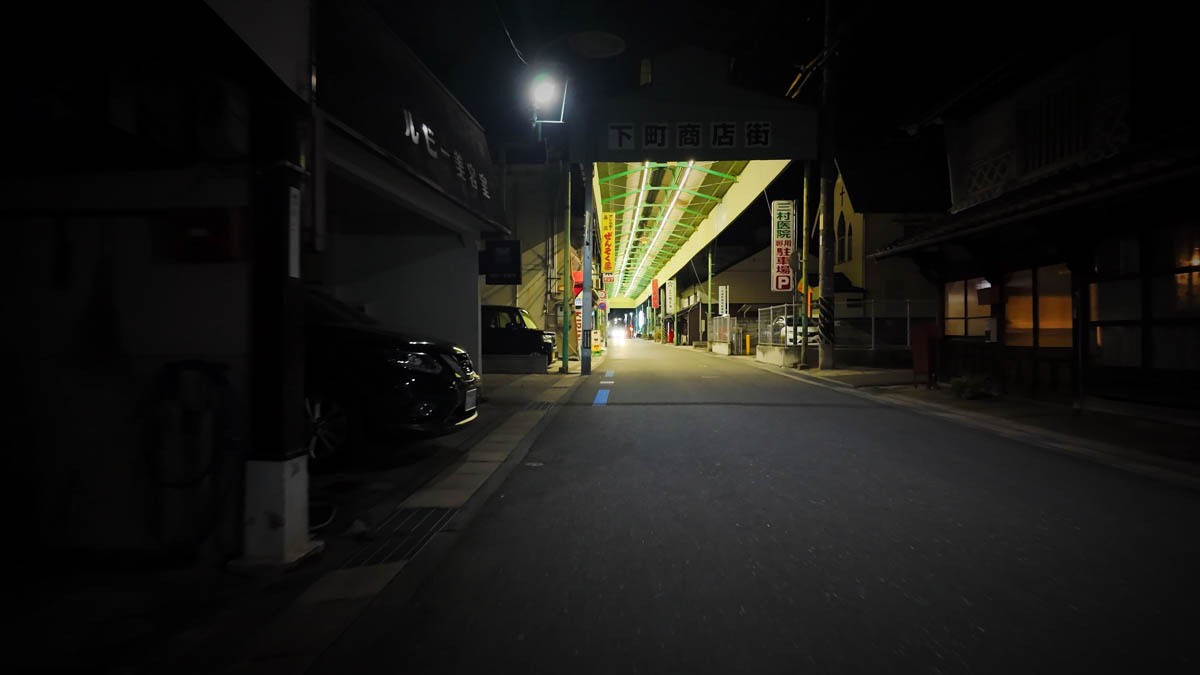
From National Route 181, I returned toward the street with the covered arcade.
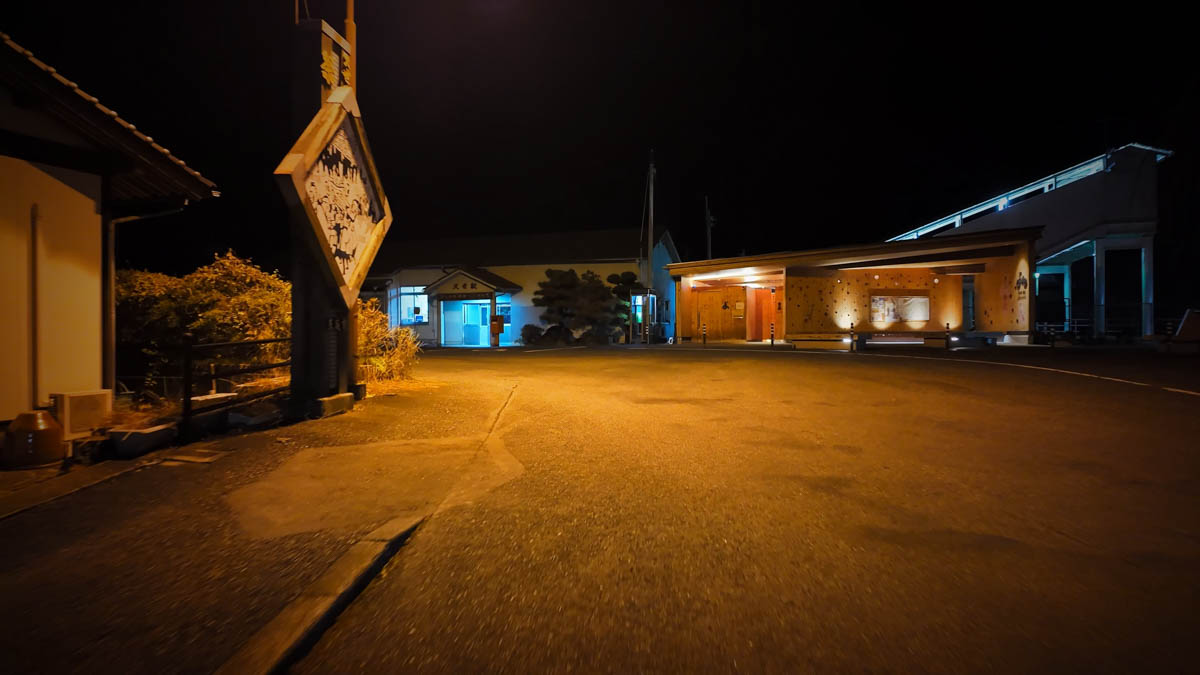
Back at Kuse Station, there were still few people around. Even so, walking through a quiet mountain town at night has its own kind of appeal. The stillness is part of the place.
Walking Around Kuse Station
I hope you'll enjoy this video alongside the post.
Consider subscribing to The Street Archive | MACHIDORI YouTube channel.