 Home
Home
[Nagahama Station / Night Walk] (Nagahama City, Shiga) — Kurokabe Square After Dark and the Quiet Dining District of a Former Red-Light District
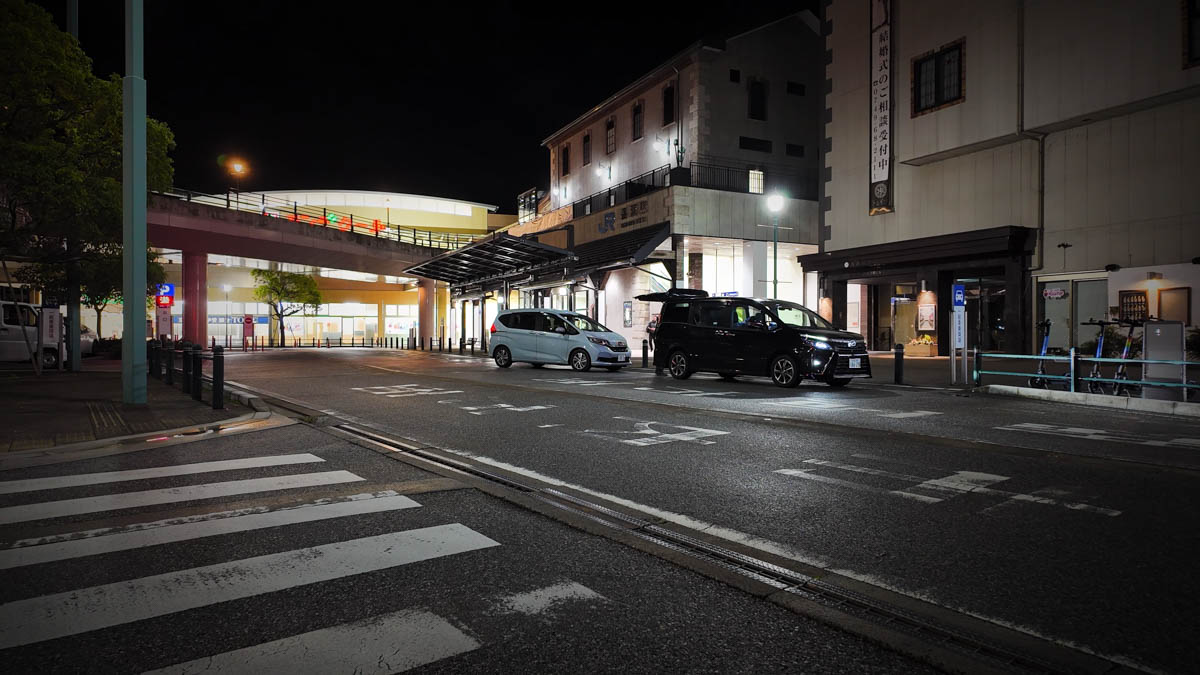
Heading north from Higashi-Omi into Nagahama City — a castle town built by Toyotomi Hideyoshi. After defeating the Azai clan, Hideyoshi was granted the northern Omi domain and renamed the area from "Imahama" to "Nagahama." The castle he built here was abandoned in the early Edo period, and the reconstruction standing on the old castle grounds today dates to 1983, modeled after Inuyama and Fushimi castles and funded through a citizen-led campaign.
Nagahama Station on JR West's Hokuriku Main Line sits just beside that former castle site. The station itself is modern — completed in 2006 — but the old streets beyond it are very much intact. Old and new, side by side: a fitting welcome to this city.
Around the Station
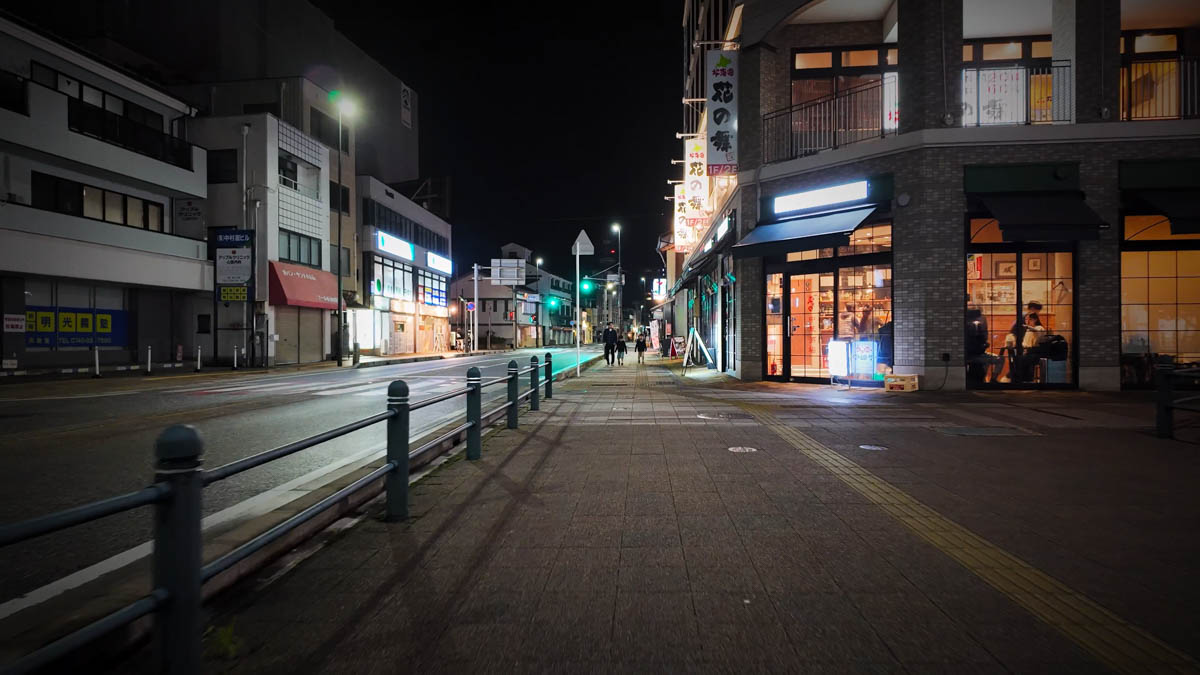
The street in front of the station is well maintained, with restaurants keeping it bright and reasonably lively even at night. For a town of this size, it's a reassuring place to start a walk.
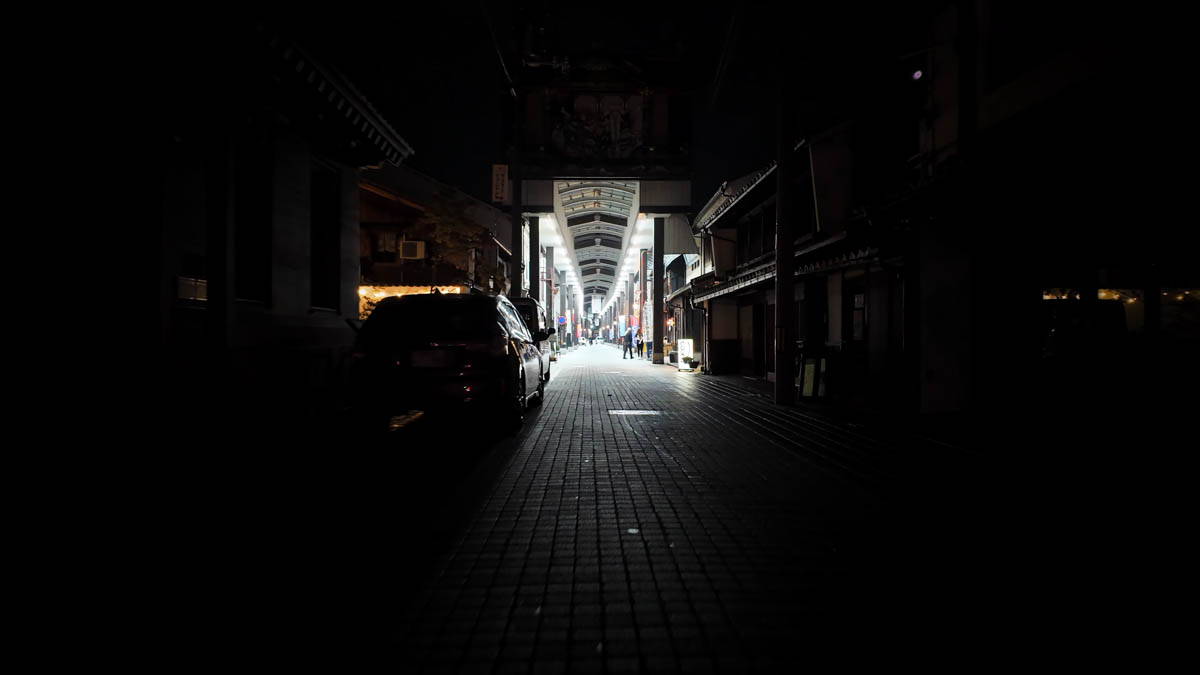
As you head toward the historic center, the streetlights thin out and the surroundings grow darker. Against that backdrop, the Nagahama Ōtemon-dōri Shopping Arcade appears like a tunnel of white light. The contrast between the illuminated arcade and the surrounding quiet has a theatrical quality that makes you want to walk straight into it.
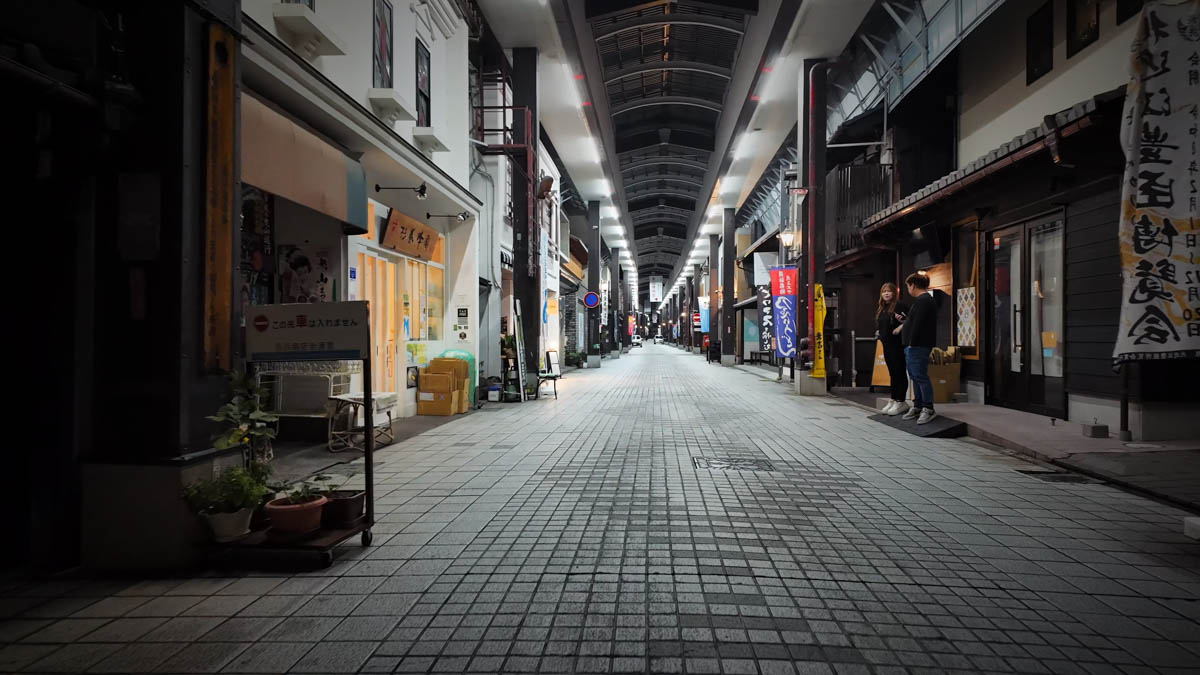
By day, Kurokabe Square draws crowds of visitors to its glass workshops and converted Meiji-era buildings. By night, the people vanish almost entirely, and your footsteps on the stone pavement are the only sound. The black-walled buildings feel more composed at night — stripped of the bustle, they hold their ground with quiet dignity.
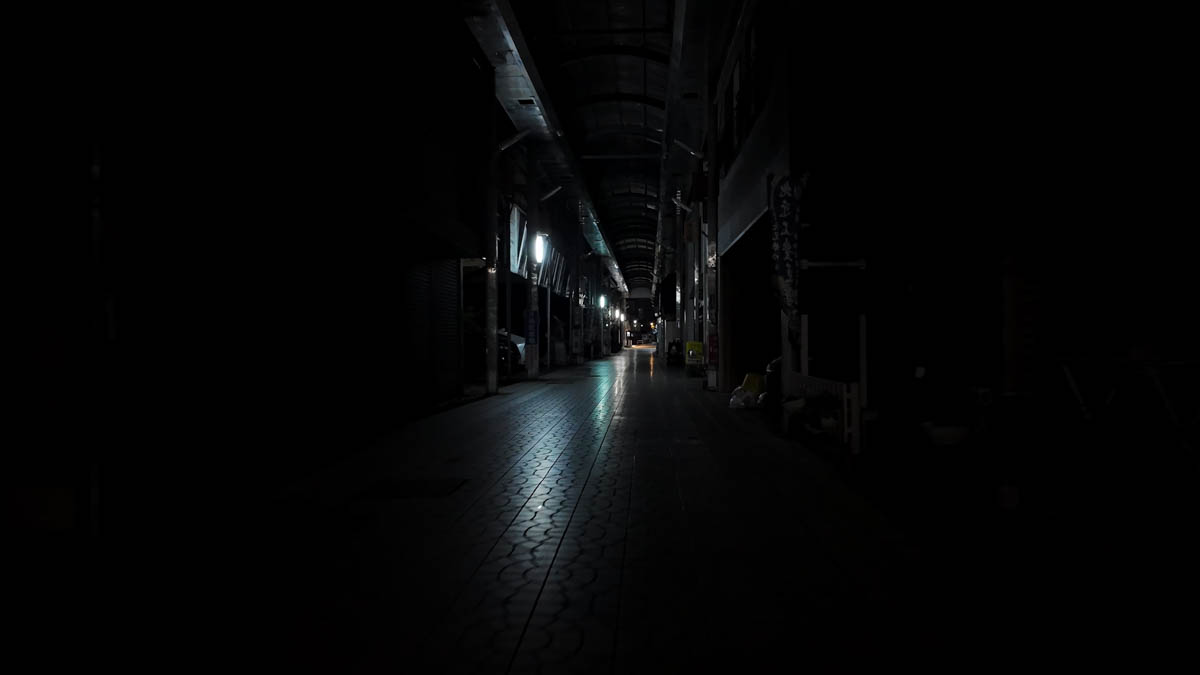
Turn off the main arcade into a side street and you're immediately in the dark. No decorative lighting, no ambient glow — just the unmediated nighttime city. It's the kind of darkness that makes you feel like you're seeing the street as it actually is.
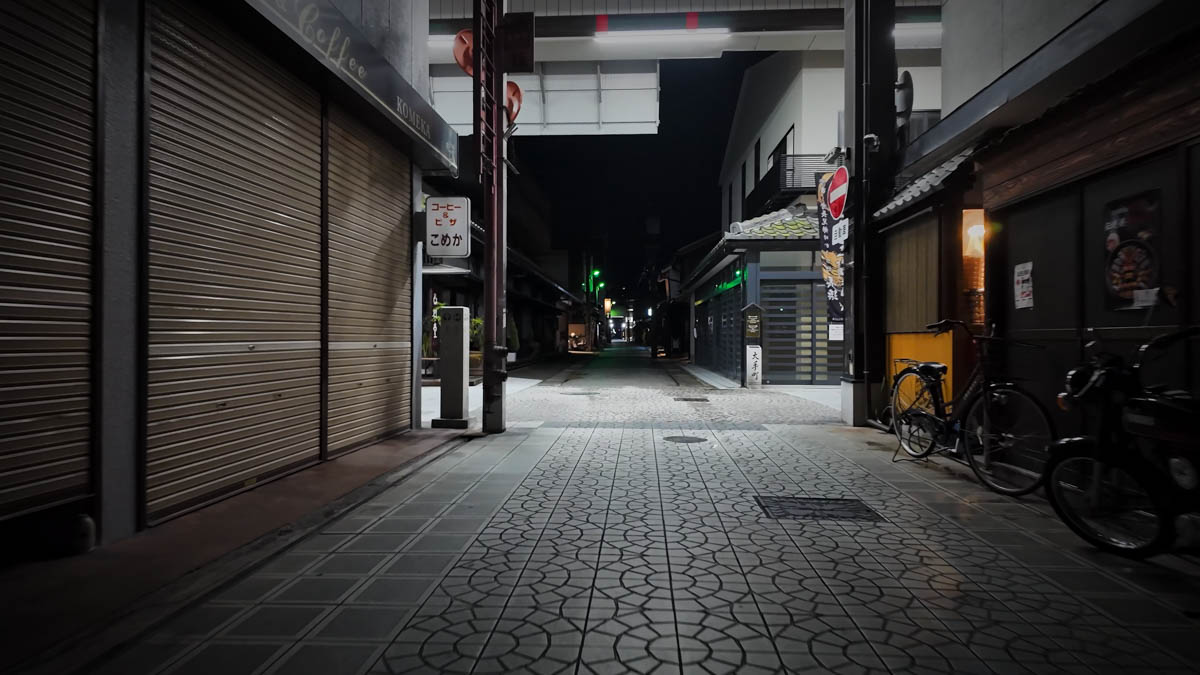
I missed this completely while walking. Looking back at the photos, I found a retro hand-painted sign for "Coffee & Pizza" — its font exactly the kind of thing you can't design on purpose. Whether it's still operating or just a leftover, I don't know. Either way, it's one of those small discoveries that make reviewing photos worthwhile.
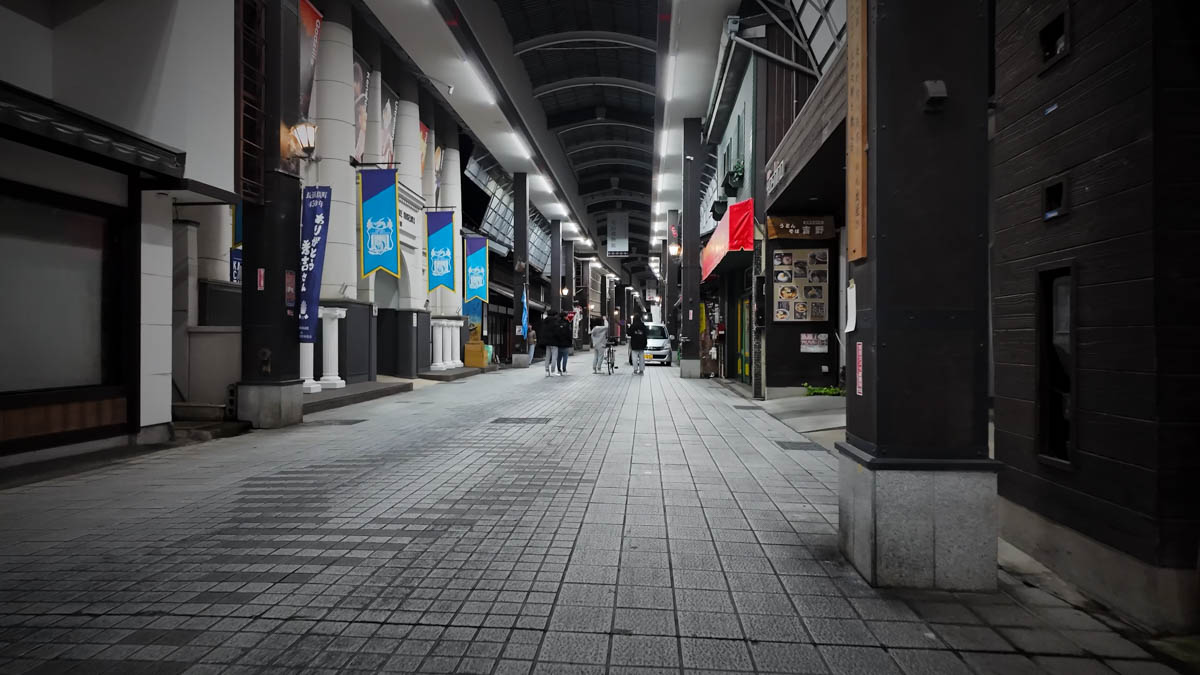
Two people talking at a corner, unhurried, comfortable. The tourist infrastructure had gone quiet, but the town itself hadn't — it was just doing something else. A warmer version of itself.
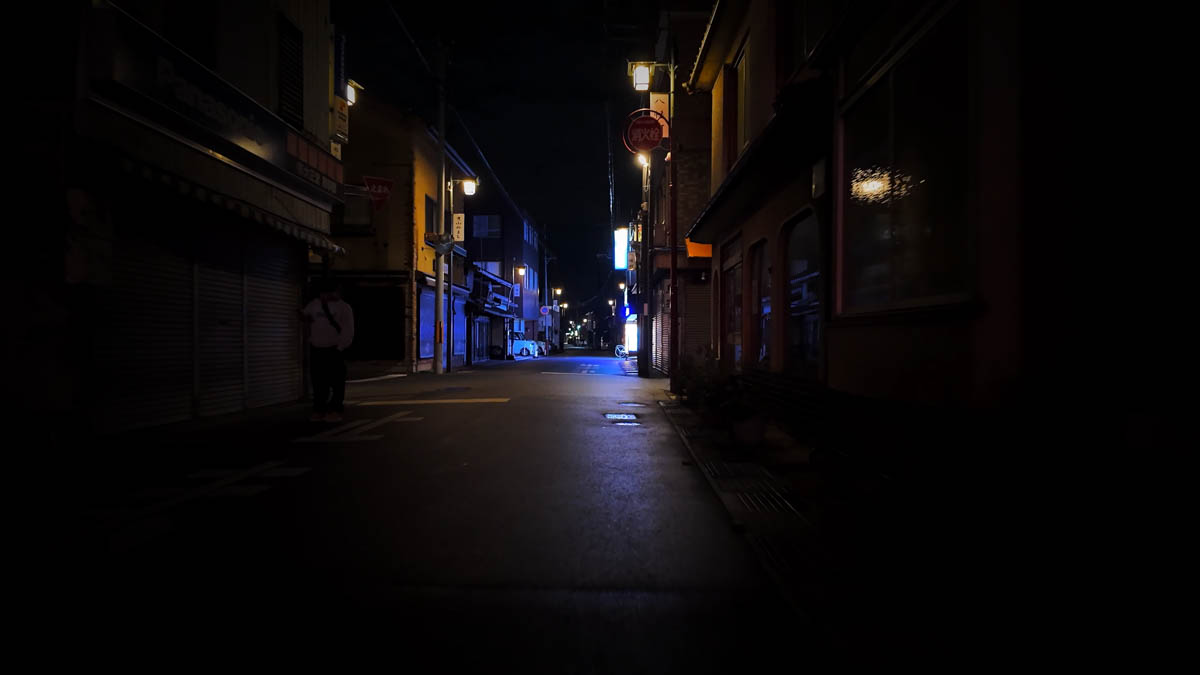
A little further along, I came upon the former red-light district — now a quiet stretch of old restaurants and small bars. It has a different feel from Kurokabe Square's polished heritage tourism, but not dramatically so. Mostly just a local street doing what local streets do at night.
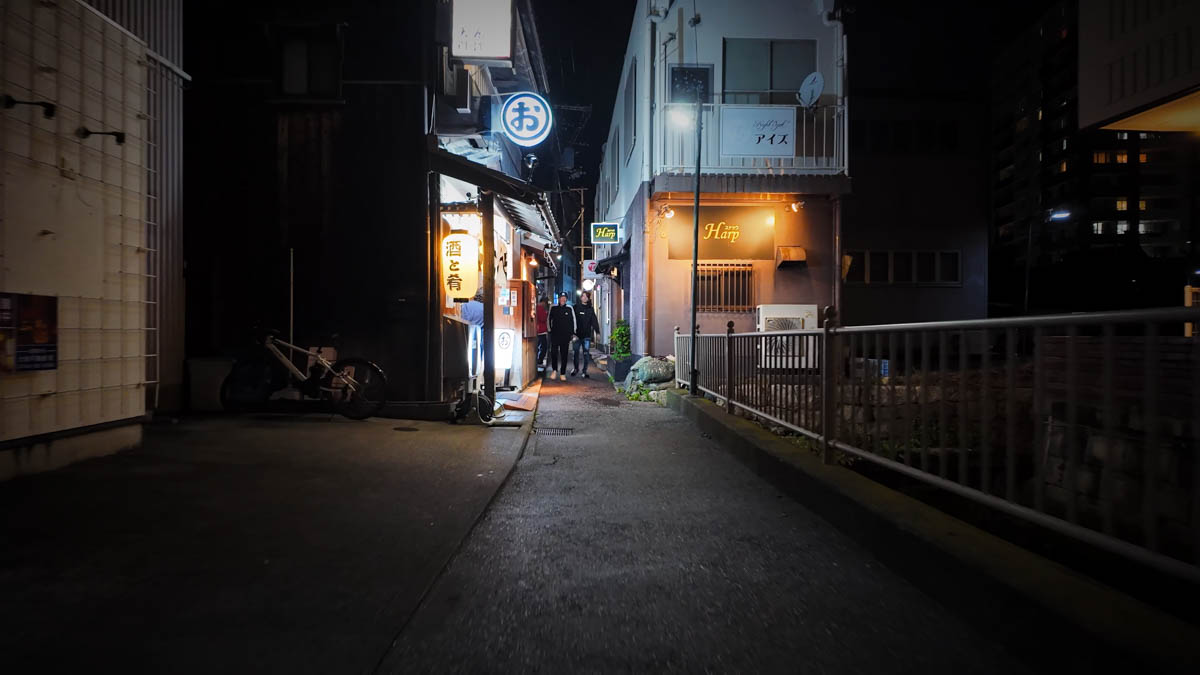
An izakaya tucked into a converted old house, warm light leaking from the gaps, the faint sound of voices and glasses from inside. As an outsider, you feel a slight hesitation — this isn't a place designed to receive you — but the beauty of the scene holds you there anyway.
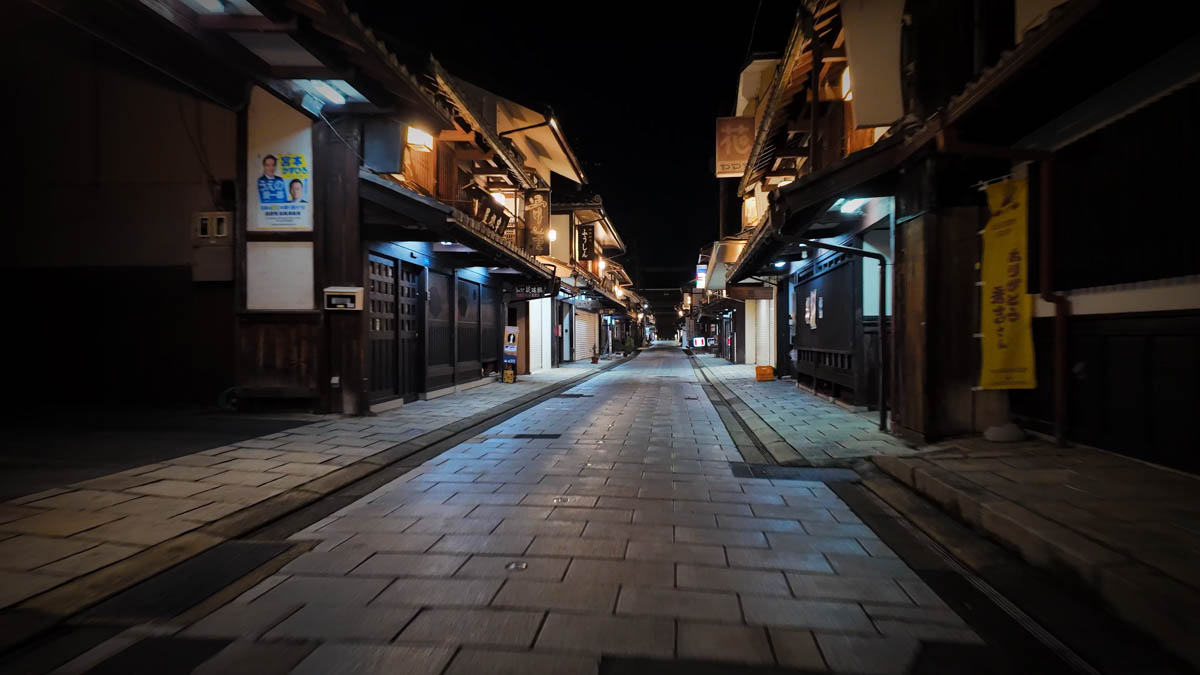
The approach to Nagahama Betsuin Daitsūji — a temple precinct that has anchored this neighborhood since the Edo period. Walking it at night, the stone pavement and old buildings feel more present somehow, the weight of the place more palpable.
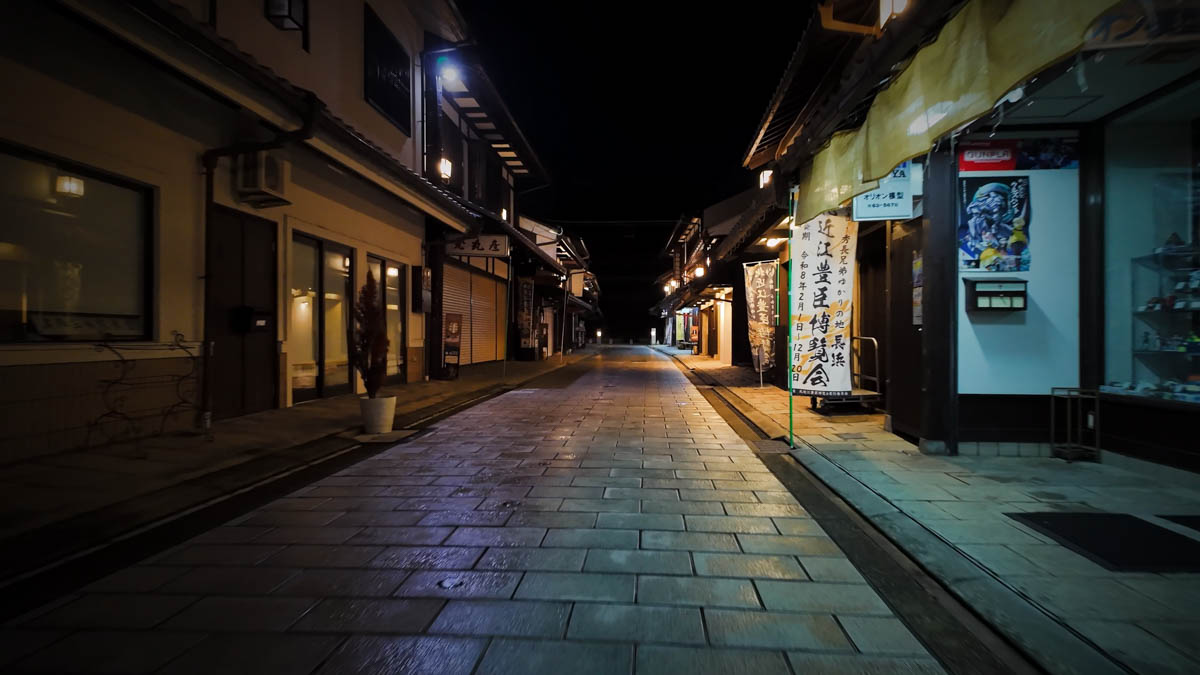
Toyotomi Kyōdai! banners everywhere — the NHK historical drama currently airing. Nagahama was where Toyotomi Hideyoshi held his first castle, so the local enthusiasm makes complete sense. Walking a street where the actual history played out, while a dramatization of it is on television, is a strange and satisfying kind of layering.
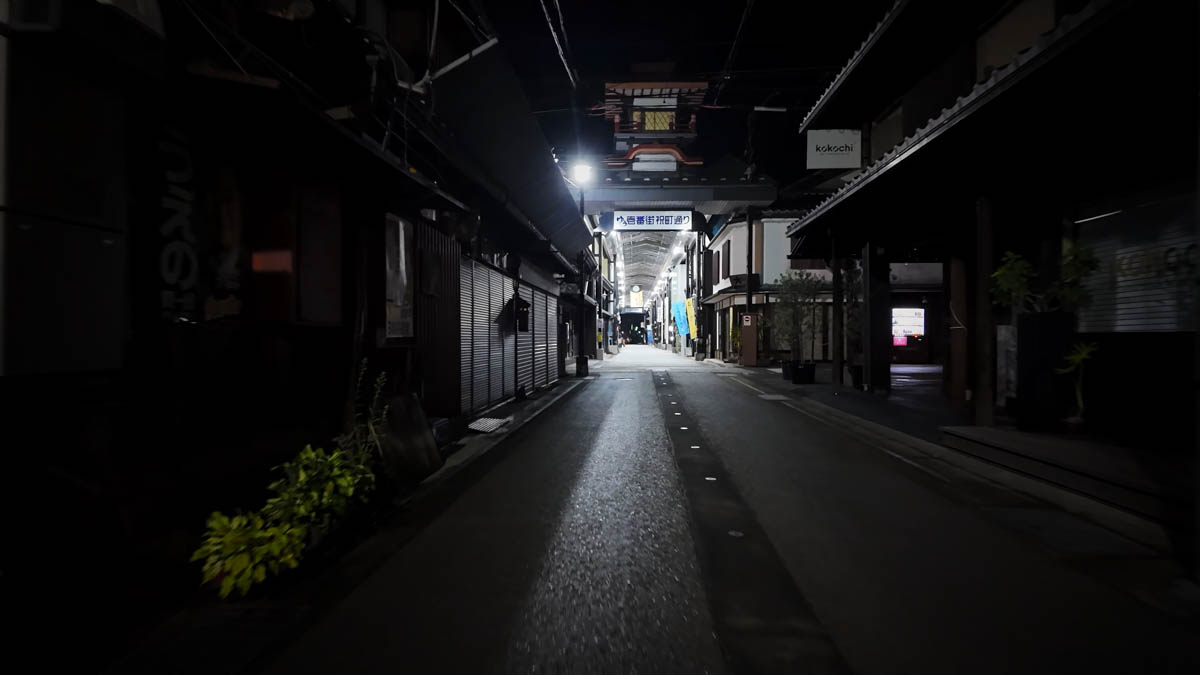
Heading back toward the station, I looked up at the arcade ceiling for the first time and found elaborate decorations I'd completely overlooked earlier. The same street, a different angle, an entirely different thing to see. A reminder that looking up is almost always worth the effort.
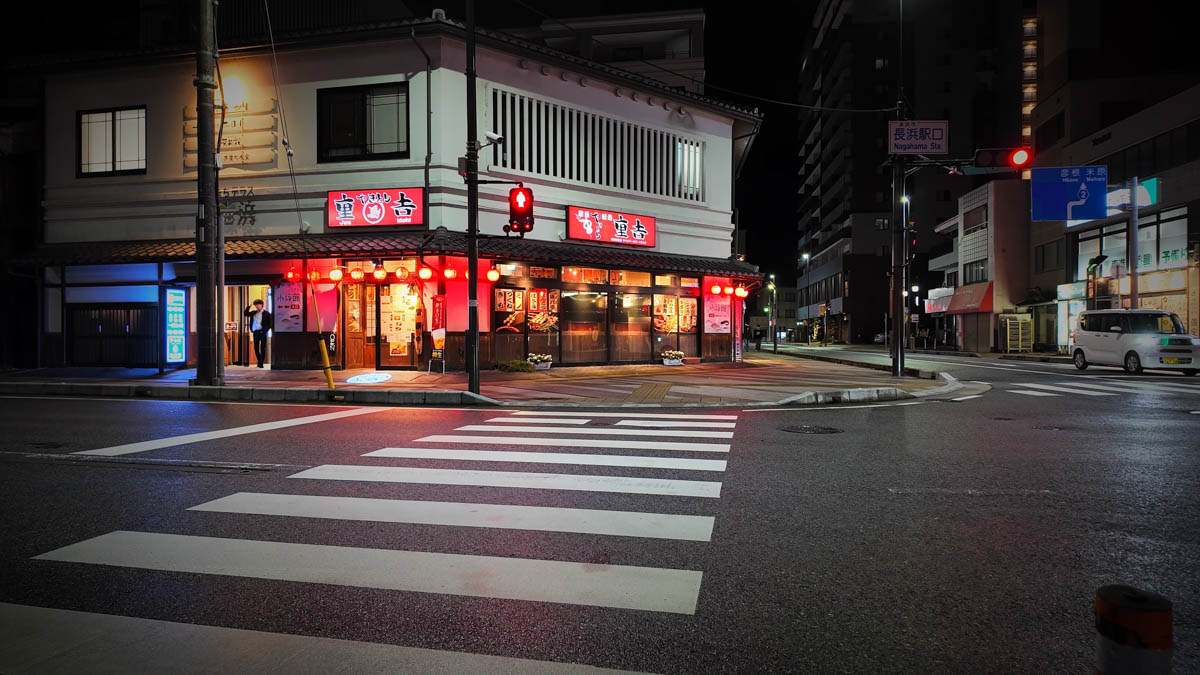
A yakitori place near the station, its noren swaying gently. The smell of charcoal and grilled chicken was enough to almost stop me in my tracks.
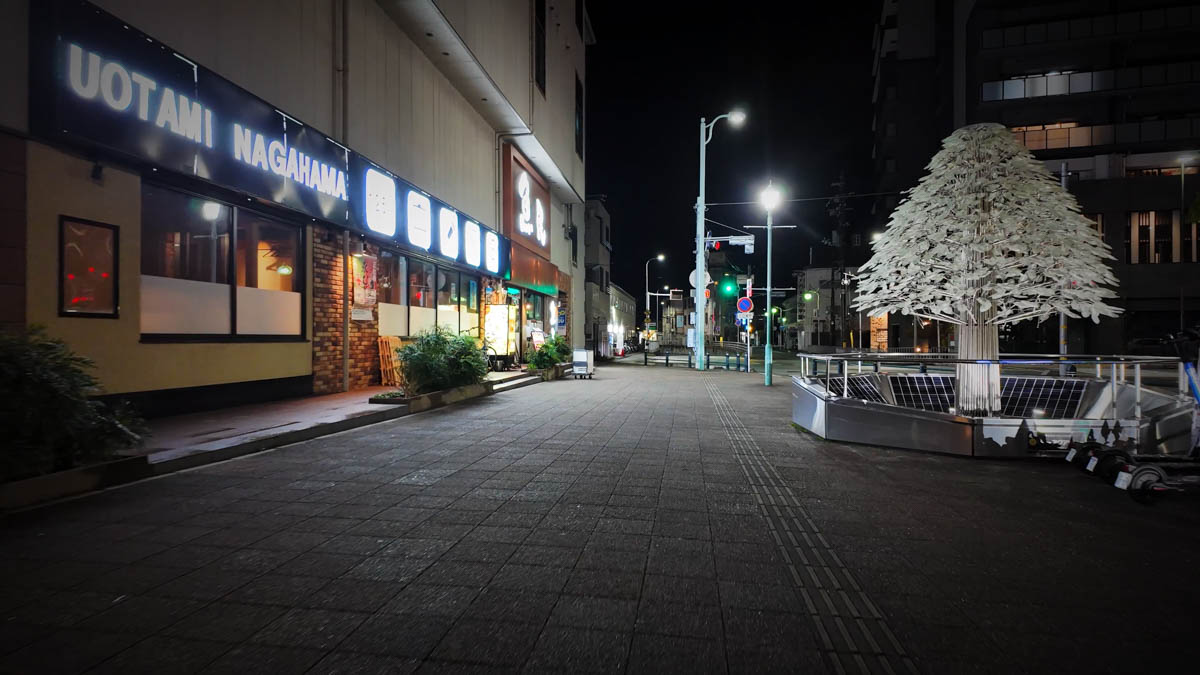
The Aqua Tree in front of the station — a glass sculpture that apparently catches the daylight beautifully. At night, the artificial lighting gives it a different kind of glow, cool and crystalline. A fitting end to a walk through a city that has always known how to make things from glass.
Walking Around Nagahama Station — Video
If you enjoyed this post, the video is worth a watch too.
Subscribe to The Street Archive | MACHIDORI YouTube channel.
![[Hida-Kanayama Station / Night Walk] (Gero City, Gifu) — The Labyrinthine Alleyways of a Town Said to Have Inspired SILENT HILL f](/images/2026/04/05/4/20260405_4_1.jpg)
![[Tsu-Shinmachi Station / Night Walk] (Tsu City, Mie) — A Retro Entertainment District and a Frozen-in-Time Arcade](/images/2026/04/05/1/20260405_1_2.jpg)