 Home
Home
The Street Archive | MACHIDORI asks for support in various ways - here's why
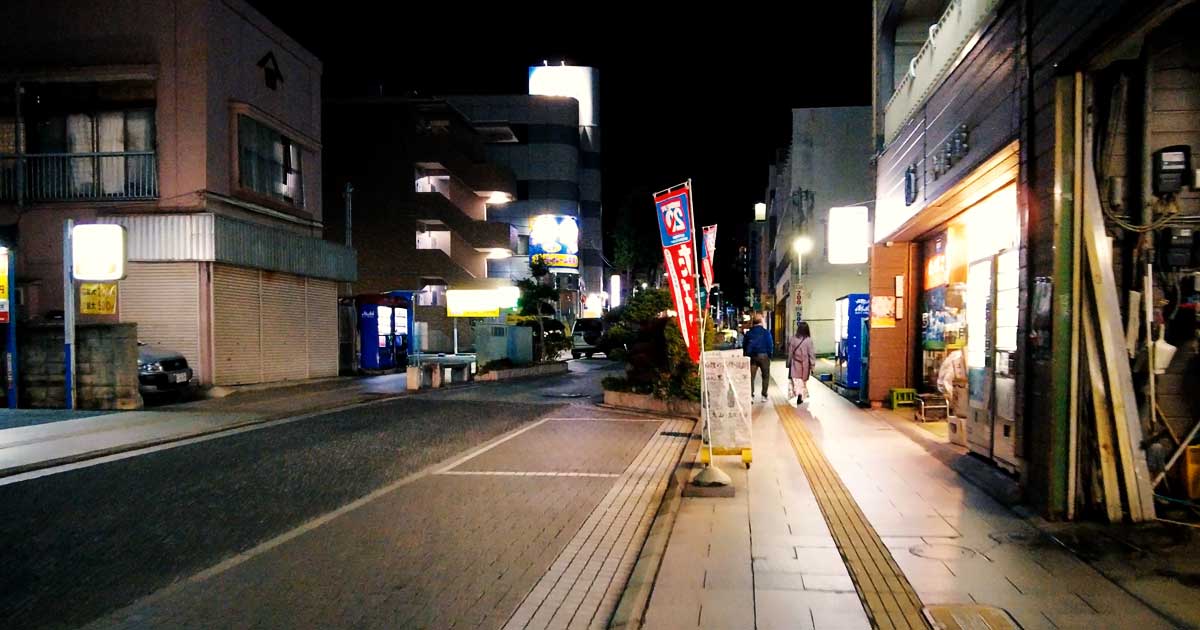 This photo is from when I went to Hitachi City, Ibaraki Prefecture. I came because I heard there was an arcade on the sidewalks on both sides of this road, but it had already been removed.
Why do I film and publish videos of cities?
Going to various cities is just fun
No matter which city I go to, I always discover something.
It's fun to research and think about what causes large shopping streets to be desolate, or what their history is.
I want to discover and share the beauty of cities
Every city has beauty. When I film and watch the videos, I discover the beauty of casual street corners, old buildings, and crumbling houses.
I want to share the beauty I discover this way, so I publish on YouTube.
Rapidly changing Japanese cityscapes
City centers and large cities like Shibuya are constantly being redeveloped and changing.
Cities that have lost population are also changing rapidly, not just shopping streets where the first arcades have been removed.
I want to preserve the changing cityscapes of Japan in the 2020s, where population decline is remarkable.
I want to preserve scenes of people living their daily lives Of course, not just the cities, but I want to preserve scenes of people living their daily lives there.
Current state of cityscapes in Japanese regional cities
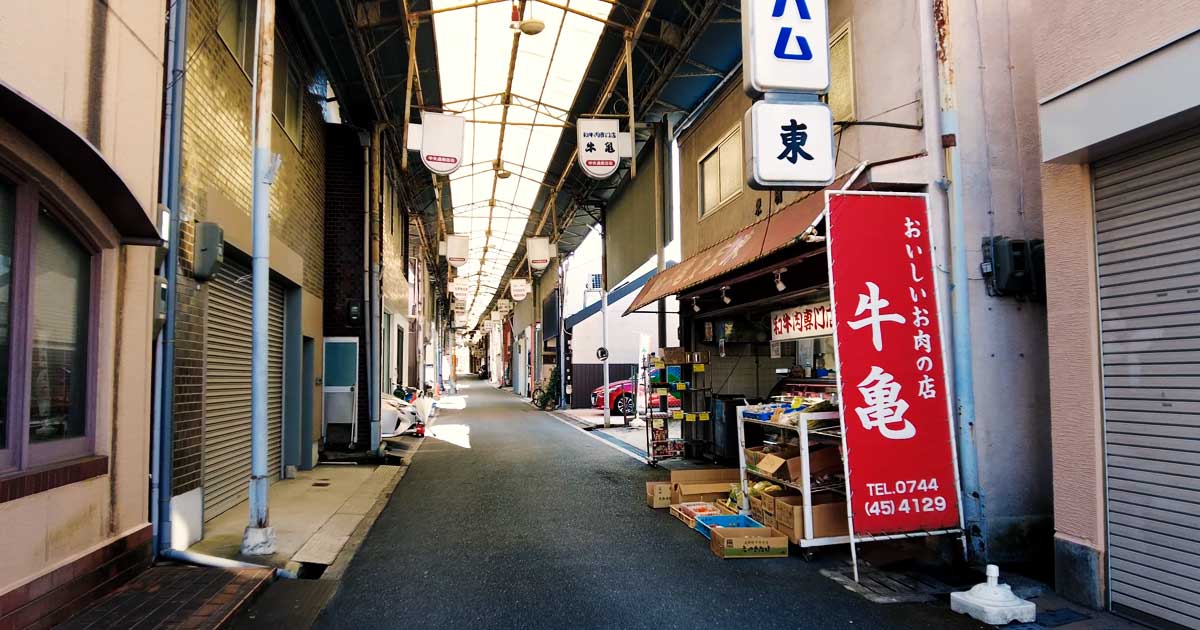 This shopping street in Sakurai City, Nara Prefecture, also had its arcade removed in 2023.
There are apparently about 760 cities, towns, and villages in Japan with a population of 30,000 or more.
Checking my filming records, I've visited about 300 cities, towns, and wards.
I haven't even visited half yet.
However, I've visited over 90% of cities, towns, and villages in the Tokyo metropolitan area (Saitama, Chiba, Tokyo, Kanagawa prefectures), so the unvisited ones are relatively distant cities, towns, and villages outside the metropolitan area.
To visit and film these unvisited cities, towns, and villages, filming trips are essential.
The money needed to film walking videos
Of course, filming trips require travel expenses.
I was doing filming trips at a loss, but that's not sustainable
I used to earn money from side jobs and use that to cover travel expenses for filming.
However, pushing myself to do filming trips like that isn't sustainable.
So to increase sustainability, I've suspended filming in distant locations.
The last distant filming was in Yamagata Prefecture exactly one year ago. Now I'm focusing on the Tokyo metropolitan area.
I want to live a life of car camping while working during the day and filming in my spare time
To do that, I'm trying to get a car first. A used light van is fine.
Ideally, it would be a Honda N-VAN. Used ones cost over 1 million yen.
It's a bit expensive among light vans. It has safety features and seems reliable for long-distance driving.
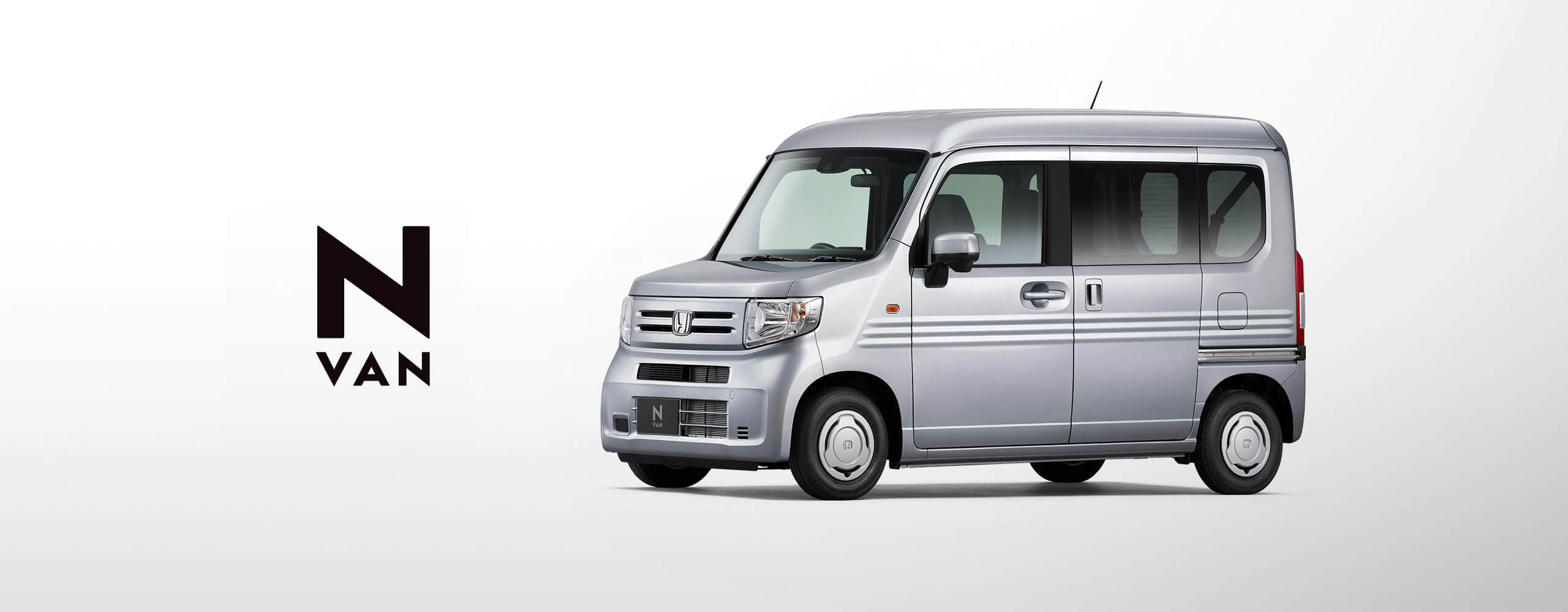
The N-VAN is a bit expensive, so realistically, I'm also considering a Daihatsu Hijet Cargo.
That would be around 300,000 to 500,000 yen.
Simulating and calculating travel expenses I want to calculate running costs assuming one filming trip per month for 10 days.
Transportation costs (gasoline, parking, etc.)
When I go to a location, I can work at a place with parking, but if I use coworking spaces, I'll need parking during that time.
Considering maximum fees, I'm thinking about 10,000 to 15,000 yen for 10 days, but it might be cheaper depending on the city.
For gasoline, it's 500 kilometers to Osaka. Light vans seem to get about 15-18 kilometers per liter.
So round trip would be about 10,000 yen, but since I stop at various places and pass through various cities, I think 15,000 yen would be safe.
Cost of places to work (coworking spaces, cafes where work is OK, etc.)
For example, "E-Office" which can be used at 900 locations nationwide has an unlimited monthly plan for 22,000 yen
E-Office
I think around 20,000 yen per month for unlimited use is typical.
Pay-per-use would be quite expensive, so monthly is probably better.
Food expenses
For lunch, I think local restaurants for local food would be good. That would be about 1,000 to 1,500 yen.
For breakfast, a pastry, and for dinner, salad and boiled eggs from a convenience store for 500 yen. I'm assuming about 2,000 yen per day.
That would be about 20,000 yen for 10 days.
Bathing fees
Public baths, super sento, day-trip hot springs—averaging about 1,000 yen per day.
That's 10,000 yen for 10 days.
Total for 10 days
Travel expenses including unlimited coworking space fees would be 80,000 yen for 10 days.
That's much cheaper compared to using hotels and public transportation.
If I used hotels instead of car camping, just the accommodation for 10 days would cost about 80,000 yen (and with inbound tourism, hotels are hard to get in some places).
Including monthly parking, car maintenance costs would be about 50,000 yen per month.
Equipment costs Total equipment purchase costs for 2023 I use a bicycle for filming, but I'm riding one I bought over 10 years ago that I've restored. Including that, bicycle-related purchases in 2023 were 104,411 yen.
Also, purchase costs for cameras, recording equipment, and peripheral equipment used for filming were 299,790 yen. I bought more than I imagined.
Total was 404,201 yen.
Other
Music subscription costs for BGM: 2,844 yen per month
Adobe product subscription costs (Photoshop, Illustrator, Audition, etc.): 6,480 yen per month
I want to deliver drive live streams frequently, not just walking videos
If I receive support, I'll have financial flexibility, and I won't need to earn money from side jobs to cover operating costs.
That will also give me time flexibility, and I'll be able to do things I wanted to do frequently but couldn't.
With that time flexibility, I'll be able to do drive live streams frequently from travel destinations.
Of course, I'll be able to film and deliver cityscapes and street corners of regional cities that haven't been fully conveyed.
What do you think? I'm spending quite a bit on filming, aren't I?
For about the past year, I've been filming in the Tokyo metropolitan area as day trips. Even so, travel expenses like transportation costs are incurred.
I want to introduce the cameras that evolve every year and preserve higher quality images.
Equipment also costs money—things break, batteries degrade, need replacement when used weekly to operate the channel.
So I'm asking for support in various ways. I'm very happy just to have understanding and empathy.
Further support would be greatly appreciated.
![[Hokkaido Cities: Nayoro]Walking around Nayoro Station, the central station of Nayoro City, one of the core cities of Northern Hokkaido](/images/2024/1/nayoro-001.jpg)
![[For People Looking for a Place to Live: Tsunashima Station]The charm of a bedroom town that opened as Tsunashima Onsen Station - an interesting history (Yokohama City, Kanagawa Prefecture)](/images/2023/12/tsunashima-003.jpg)
![[Hokkaido Cities: Kitami]Walking through the city featured in Netflix drama "First Love"](/images/2023/12/kitami-001.jpg)